
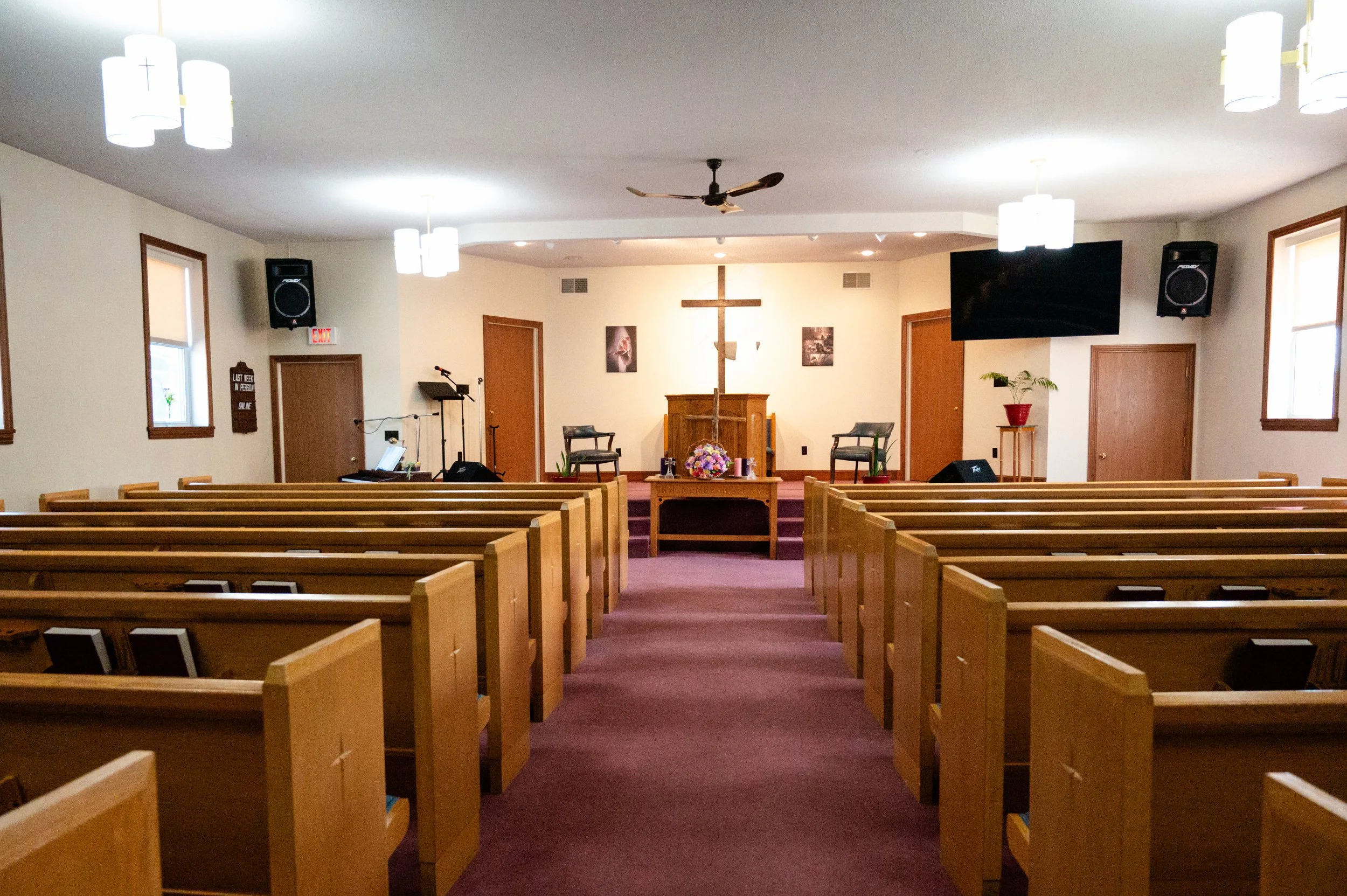
The Mission Field in Row Four: Loving the Stranger Sitting Next to You
We often hear the word "mission" and instantly picture a passport, an international flight, or a dusty road in a distant corner of the world. While global missions are a vital part of the Gospel, that grand vision can sometimes blind us to a quieter, equally urgent calling: the person sitting two feet away from you every Sunday.
Most of us are creatures of habit. We find our favorite row, offer a polite smile to our neighbors, exchange a quick nod during the greeting time, and rush out to beat the lunch crowd. But beneath those friendly smiles are real stories—hidden grief, silent prayers, deep fatigue, and a desperate longing for genuine community.
Jesus reminds us of our core identity in John 13:34–35:
"A new command I give you: Love one another. As I have loved you, so you must love one another. By this everyone will know that you are my disciples, if you love one another."
Before we can effectively take the love of Christ across the globe, we are called to embody it right here across the aisle. Moving from a crowd of strangers to a family of believers doesn't require a mission board or a plane ticket—it simply takes a heart willing to notice.
Why God Placed You in That Pew
You Are the Hands and Feet: God doesn't bring people into your local church by accident. The person beside you may be walking through a season of intense loneliness, praying for just one person to care.
Faith Grows in Community: Hebrews 10:24–25 urges us to "consider how we may spur one another on toward love and good deeds, not giving up meeting together... but encouraging one another." You cannot encourage someone whose story you do not know.
Proximity Isn't Connection: Sharing a bench for an hour isn't the same as sharing a life. True Christian fellowship begins when we step past polite courtesy into intentional relationship.
Practical Ways to Cross the Aisle This Sunday
Here is a simple roadmap to turn Sunday worship into an opportunity for life-changing connection:
1. Practice the "Rule of 5"
Arrive 5 minutes earlier than usual and stay 5 minutes after the closing prayer. Resist the immediate dash to your car. The sanctuary lobby is fertile ground for ministry.
2. Shift from "Greeting" to "Gathering"
Move beyond the standard "How are you?"—which usually invites a automatic "Good!" Instead, ask intentional, open-ended questions:
"How can I be praying for you as you head into this week?"
"What was one thing from the message today that spoke to you?"
"How long have you been coming here, and what’s your story?"
3. Move Beyond the Building
Galatians 6:2 calls us to "Bear one another's burdens, and so fulfill the law of Christ." You can't bear a burden in a two-minute greeting. Invite your neighbor to grab a coffee, share a quick lunch, or sit together again next week.
The local church is not a theater where we sit as silent spectators; it is a family table where everyone belongs. Next Sunday, take a deep breath, look past the comfort of your routine, and turn to the person beside you with an open heart and a warm hello. You might just find that your next mission field isn't thousands of miles away—it's waiting right in Row Four.

Inviting Others to Church Without Feeling Awkward
Inviting Others to Church Without Feeling Awkward Inviting someone to church can feel intimidating. You want to be genuine, respectful, and helpful without putting pressure on the other person or compromising your own comfort. Here are practical, faith-centered ways to invite others that feel natural and heartfelt.
Start with relationship, not a pitch
Build trust first. People are more receptive when invitations come from genuine relationships rather than a scripted outreach.
Listen more than you speak. Ask about life, struggles, and joys. When you understand someone’s context, your invitation will be relevant and compassionate.
Use simple, natural language
Keep your invitation conversational and low-pressure. For example: “I’d love for you to come with me to church this Sunday. No expectations—just a chance to hang out if you’re interested.”
Avoid theological debates or heavy persuasion. An invitation is an open door, not an argument.
Offer specific, practical information
Tell them when and where, how long the service usually runs, and what to expect (style of music, dress, childcare, parking).
Offer logistics: “I can pick you up,” or “We usually grab coffee afterward if you want to join us.”
Share a personal reason, briefly
A short, honest testimony can make your invitation feel authentic: “Church has been a place where I find peace and community, and I thought you might enjoy it.”
Keep it centered on your experience rather than implying the person needs to change.
Be sensitive to timing and context
Look for natural openings: after a meaningful conversation, during life transitions (loss, new job, moving), or when someone expresses curiosity about faith.
Avoid making the invite feel like an obligation tied to holidays or guilt.
Respect boundaries and welcome questions
Make it clear there’s no pressure: “No worries if it’s not your thing—just wanted to extend the invite.”
Invite questions and answer them simply. If you don’t know something, offer to find out.
Make church feel accessible
Highlight aspects that reduce barriers: family-friendly options, casual dress, accessible building, or an online sermon if they’re more comfortable starting remotely.
Emphasize community and service opportunities rather than only doctrinal points.
Use group invitations
Inviting someone to a small group, service project, or a community meal can feel less intimidating than a one-on-one invitation to a worship service.
A group setting allows people to meet multiple members and see church life in a relational context.
Follow up gently
If they say maybe, follow up once with a friendly reminder. Respect their space if they decline or don’t respond.
If they come, follow up afterward to see how they felt and offer to answer any questions.
Pray and rely on patience
Pray for wisdom and for the person you’re inviting. Remember that spiritual growth often unfolds over time.
Be patient and consistent in friendship; sometimes the invitation is an ongoing, relational process rather than a single moment.
Sample invitation phrases
“Would you like to come with me to church this Sunday? We can grab coffee after.”
“Our church is having a community meal this weekend—would you want to join?”
“If you ever want to visit a church that’s welcoming and low-key, I’d be happy to go with you.”
“We have a small group that meets to talk about life and faith. You’re welcome to come check it out—no pressure.”
Inviting others to church is an act of hospitality when done with humility, clarity, and respect. Focus on relationship, give clear information, offer practical help, and leave space for choice. Over time, consistent friendship and gentle invitations reflect the welcome you want to extend: open, caring, and free of awkward pressure.
Fairview BIC welcomes anyone curious about faith, community, and service. If you’d like help practicing invitations or want conversation starters tailored to your context, we’re here to support you.

Moving Beyond "Sunday-Only" Faith
It’s easy to treat faith like a weekly appointment. We show up, engage for an hour or two, and then pack it away when the Monday morning alarm rings. But genuine faith isn’t a Sunday morning event — it’s a daily operating system.
Living your faith throughout the week isn’t about adding more religious tasks to your to-do list. It’s about shifting your perspective from Inside-Out (focusing only on internal comfort and routines) to Outside-In (looking at how your values interact with the world around you). It’s about ensuring that your daily life reflects a healthy, holistic framework built on clear communication, deep engagement, and real value.
Here is how you can transition your faith from a Sunday ritual into a Monday-through-Saturday reality.
The Midweek Shift
To break out of the Sunday routine, it helps to focus on four essential pillars of daily practice:
Pillar 1: Active Engagement
Faith shouldn't be passive. Instead of just consuming a message once a week, look for daily opportunities to put your values into action. This means actively engaging with your family, your coworkers, and your community in a way that reflects your core beliefs.
Pillar 2: Everyday Synergy
Your professional life, your personal hobbies, and your spiritual values shouldn't live in separate boxes. True alignment happens when your daily decisions, business ethics, and relationships all work together in harmony, driven by the same foundational principles.
Pillar 3: Intentional Communication
The way you speak to others — and the way you listen — matters. Living your faith daily means prioritizing clear, empathetic, and honest communication. It’s about building bridges, offering encouragement, and being a steady, reliable presence in a chaotic world.
Pillar 4: Visible Value
The ultimate test of a lived faith is the value you bring to the people around you. Are you leaving your workplace, your neighborhood, or your home better than you found it? Daily faith is defined by the practical, positive impact you make on a regular Tuesday afternoon.
"Faith is taking the first step even when you don't see the whole staircase." — Martin Luther King Jr.
Practical Ways to Live It Out Daily
Moving from theory to practice doesn't require a radical lifestyle overhaul. It happens in the small, consistent habits of your daily routine.
Area of Life
The Workplace:
Sunday Mindset: Keeping your head down and waiting for the weekend.
Everyday Practice: Treating colleagues with high respect, practicing integrity in business dealings, and mentoring others.
The Community
Sunday Mindset: Waiting for organized charity events or drives.
Everyday Practice: Noticing immediate needs around you, supporting local initiatives, and being an approachable neighbor.
The Home
Sunday Mindset: Reserving shared values for formal family discussions.
Everyday Practice: Prioritizing daily check-ins, intentional listening, and showing grace during stressful moments.
Living your faith outside the walls of a building is a continuous journey. It requires moving past static, comfortable routines and stepping into a dynamic, everyday commitment to the people and communities around you.

How to Get Connected and Make Friends at Church
Attending church can be a meaningful place to grow spiritually and find community, but it can also feel intimidating to build relationships—especially if you’re new. Here are practical, welcoming steps to help you get connected and make friends at church.
Show up regularly
Consistency matters. Attending services, small groups, or events on a regular basis helps others recognize you and gives you repeated opportunities to interact. Even if you can’t attend every week, aim for steady involvement so relationships have time to develop.
Introduce yourself
Start simple: offer a friendly smile, a handshake, or a brief “Hi, I’m [Name]” before or after services. Many people are just as glad someone else reached out. If your church has a welcome area or hospitality team, stop by and share your interests or questions.
Join a small group or Sunday school
Small groups, life groups, or Sunday school classes are where deeper friendships form. These settings provide regular, smaller-scale interaction and time for conversation, prayer, and mutual support. Look for groups organized by life stage, interest, or location.
Serve with others
Serving together builds camaraderie quickly. Find a volunteer role that fits your gifts—ushering, children’s ministry, hospitality, outreach, worship team, or facility care. Serving removes pressure to be “on” socially and creates shared purpose.
Be curious and listen
When you meet someone, ask open questions and listen more than you talk. Good conversation starters:
“How long have you been coming here?”
“What drew you to this church?”
“Are you involved in any groups or ministries?” Follow up on details people share—remembering names, family details, or hobbies shows you care.
Invite and follow up
Take initiative to move beyond brief encounters:
Invite someone to coffee or a church event.
Ask a family over for a casual meal or a park playdate.
Follow up with a text or message: “It was great meeting you—would you like to grab coffee next week?” People appreciate invitations; many want connection but are hesitant to initiate.
Attend social and outreach events
Community meals, potlucks, service projects, and seasonal events are lower-pressure ways to meet people across the church. These activities often bring out people’s natural warmth and create shared memories.
Be patient and consistent
Friendships take time. Expect gradual progress rather than instant closeness. Keep showing up, keep reaching out, and be consistent in how you engage.
Respect boundaries and diversity
Church community includes people with varied backgrounds, personalities, and boundaries. Be sensitive to different social needs—some prefer deep conversation right away, others open up slowly. Respect schedules, family commitments, and personal space.
Use digital tools wisely
If your church uses a directory, Facebook group, or messaging platform, use it to stay informed and reach out. Online groups can be a useful bridge to in-person connection, but don’t let them replace face-to-face time.
Bring others along
Meeting people is easier in groups. Invite a friend, neighbor, or coworker to join you—introducing someone new can create natural conversation and broaden your circle.
Making friends at church is a combination of presence, initiative, service, and patience. Start with one or two steps that feel manageable—regular attendance, a small group, or a volunteer role—and build from there. Your openness and willingness to invest will not only deepen your own faith journey but help others feel welcomed as well.
If you’re in the New Cumberland area and looking for a welcoming community, come visit Fairview BIC—we’d love to meet you and help you find the right group or service to get involved.

Why Church Attendance Still Matters
In an era of digital connection, on-demand content, and increasingly busy schedules, many people question whether regular church attendance still matters. For Fairview BIC and many communities like ours in New Cumberland, the answer is a clear yes. Church attendance continues to offer spiritual, relational, and practical benefits that are difficult to replicate online or on your own.
Spiritual Formation Happens in Community
Spiritual growth is not only an individual pursuit. Regularly attending worship services, Bible studies, and prayer gatherings provides structure and rhythm for faith. Corporate worship shapes our theology, reinforces scripture, and helps move belief into practice. Hearing God’s Word preached, participating in sacraments, and praying together deepen spiritual formation in ways private devotion rarely does.
Shared Worship Strengthens Faith
Worshiping together creates a powerful sense of awe, encouragement, and accountability. When people sing, pray, and respond together, faith becomes tangible and contagious. Seeing others live out their faith provides real-world examples and encouragement during seasons of doubt or struggle.
Authentic Community and Meaningful Relationships
Church is one of the few places intentionally designed for building long-term, intergenerational relationships. Regular attendance fosters friendships that carry through life’s highs and lows—births, illnesses, job changes, grief. These relationships provide emotional support, practical help, and mutual encouragement that social media connections rarely sustain.
Service and Mission Are More Effective Together
When people gather, they identify needs and combine gifts to serve the neighborhood and beyond. Churches coordinate food drives, volunteer teams, counseling, and local outreach with greater organization and continuity than ad hoc efforts. Attendance helps members discover their gifts and plug into service in ways that transform both giver and recipient.
Formation of Character and Responsibility
Consistent involvement in church life cultivates virtues like humility, patience, forgiveness, and generosity. Being part of a faith community means holding one another accountable in love and learning how to navigate conflict, reconcile differences, and serve sacrificially. These practices shape character over time.
Multigenerational Faith Transmission
Families passing faith to children benefit greatly from regular church participation. Children learn the rhythms of worship, hear scripture explained in age-appropriate ways, and see adults practicing faith consistently. Intergenerational settings allow younger people to learn from older believers and vice versa, preserving traditions and adapting them to today’s needs.
Mental and Emotional Well-Being
Research consistently links involvement in faith communities with better mental health outcomes: lower rates of loneliness, greater life satisfaction, and stronger coping mechanisms in crisis. Rituals, shared narratives, and supportive relationships all contribute to emotional resilience.
Accountability and Healthy Discipline
Attendance creates a framework for spiritual disciplines—regular prayer, scripture reading, service, and confession—supported by others. It's easier to maintain spiritual practices when they’re embedded in communal rhythms like weekly worship, small groups, and service projects.
A Public Witness to Community
Gathering visibly communicates hope, care, and commitment to the wider community. Churches that show up consistently—through worship, service, and presence—demonstrate tangible love for their neighborhoods. That public witness often opens doors for conversation and service that private faith cannot.
Adaptability and Presence in Times of Need
When crises hit, congregations that meet regularly are better positioned to mobilize resources quickly—emergency meals, counseling, childcare, or financial assistance. The presence of an already-connected community means faster and more effective responses in times of personal or communal hardship.
Practical Suggestions for Staying Connected
Prioritize a weekly gathering: treat it as a calendar commitment rather than optional.
Join a small group or Bible class for deeper relationships and study.
Volunteer in a ministry that matches your gifts—serving builds belonging.
Bring others with you—inviting a neighbor or friend is an easy way to extend community.
Balance online and in-person engagement: streaming is helpful, but be intentional about face-to-face involvement.
Church attendance remains a vital part of Christian life—not out of obligation, but because it nurtures faith, relationships, service, and resilience in ways that individual efforts alone cannot. At Fairview BIC, we welcome people at every stage of faith to come, belong, and grow together. Regular participation in a faithful community strengthens both individuals and the neighborhood we serve.

Now what?
Last month we answered the question “what happens when I die”. Along with the answer, we learned that there was a requirement before eternal life can be claimed.
What do I need to do?
A very familiar Bible verse tells us. John 3:16, “For God so loved the world that He gave his one and only Son, that whoever believes in him will not perish but have eternal life.”
The one and only Son declared in this verse is Jesus Christ. Jesus came to earth for one reason: to die on the cross. Why did Jesus have to die? Now that is a very good question and it takes us back to the beginning of time with Adam and Eve. When our ancestors chose to disobey God in the Garden of Eden, sin entered the world and the human heart. Sin is defined as any thought, attitude, or action against God’s laws or character. The result of sin is a damaged relationship with God. Sin caused a divide between Him and the man He created. In order for us to be reconciled to God and have a relationship again, sin must be dealt with. Mankind can not deal with it because of our inborn sin nature. There had to be another way: Enter Jesus. Jesus came to earth as a baby, lived a perfect sinless life, and died on a cross to save all of mankind from their sin. That means Jesus took sin, all sin, even yours and mine, onto his own body and died the death all sinful mankind deserved. On the third day after his crucifixion, God raised Jesus from the grave of the dead to the glory of eternal life. Sin was dealt with by the sacrifice of Jesus Christ. A relationship with God forever is now possible.
So, what do I need to do?
The Bible passage in Romans, chapter 10, verse 9 tells us very plainly what to do. “That if you declare with your mouth that Jesus is Lord, and believe in your heart that God raised him from the dead, you shall be saved.”
Believe that Jesus took your personal sin on his body. Believe that he died for you. Believe that he suffered the cross in your place. Believe that he was raised from the dead to life eternal by God. Believe with your heart and pray it with your voice to the one true God and eternal life is yours.
Here is a sample prayer: “Lord Jesus, I am a sinner. I believe you died for my sins so I can be forgiven. I receive you as my Lord and Savior. Thank you for coming into my life.”
If you have prayed this prayer in true belief and faith, please contact us! We would love to send you resources to help you in your new faith walk.

How can I have a relationship with God when I can’t pray the right way?
I had an interesting question asked to me from a harried and hurried mother as she was trying to fit a Bible Study into her day. Her question was this, “How can I have a relationship with God when I can’t pray the right way?”
Answering a question with a question isn’t really a good response, but I did anyway. “What is praying the right way?”, I asked. “You know, on your knees, in the quiet, without distraction,” she said.
So, to be clear, I restated her concern. “You feel you do not have an intimate relationship with God because you don’t have time to pray in a prescribed way?” She answers in the affirmative.
Are there some of you that have that same concern? Let me give you three ways to develop your prayer life and the intimacy with God that you desire.
Let me confirm that God hears your prayers regardless of the time, place, or position you are in. We have a God who never tunes us out or turns us off. He wants to communicate with you always.
The first way is to communicate from your heart. Move into God’s presence and stay there. Talk to Him honestly about your love, joy, anger, confusion, burdens, and busyness.
Secondly, talk to God habitually throughout the day. Say simple prayers of a few words or sentences. Understand the need to stay in contact with Him. Thirdly, pray in the ordinary. Your day has a routine. Talk to God during the rhythm and flows of daily life. He cares about each moment of your life.
God wants a closer relationship with you and prayer is our way of building that relationship. Try building these three elements into your life and look for the blessings it brings.

What happens when I die?

Before we talk about death, let’s talk about life, specifically how we were created. God created all humanity with three components: body, spirit, and soul. The physical body is material in that it can cease to exist. There is an endpoint to its life. The spirit/soul are immaterial because they are eternal, or have no endpoint of existence.
The body consists of the external and internal parts that function together to keep us alive on earth. They are physical and can be seen. The soul can not be seen physically but is known as our life, mind, and will; our inner self. In other words, they represent who we really are in mental, moral, and social likeness. The spirit is that part of our being that remains actively participating with the Holy Spirit. It is known as our God-consciousness or spiritual self.
Is everybody good? Okay, now to answer the question. What happens when I die?
When the physical body breaths out its last breath, the body and soul/spirit part ways. The body begins to deteriorate and turns to dust. However, God calls the body, at this time, in a state of “sleep”. The Bible passage of First Corinthians 15:51,52 says, “Listen, I tell you a mystery: We shall not all sleep (state of body death), but we will be changed- in a flash, in the twinkling of an eye, at the last trumpet. For the trumpet will sound, the dead will be raised imperishable (unable to die), and we will be changed.” So, our bodies, even though they are breaking down, will be made new again. That is God’s promise.
Our soul/spirit is in the presence of God the minute the body expires. Our inner being immediately goes to Heaven to live with the Lord forever. A Bible passage in Second Corinthians 5:6 tells us about the Apostle Paul’s view on death. He says, “Therefore. we are always confident and know that as long as we are at home in the body, we are away from the Lord.” Paul distinguishes his mortal body from his soul/spirit. His desire is to be with Jesus and he will be when his body ceases to exist.
So, this is what God promises: when we die our soul/spirit goes to be with Him. There will be a future time when our bodies will be made new and rejoin our soul/spirit. This is an eternal condition.
BUT, there is a requirement for this to be true for you. Come back next month to learn what we have to do to gain this eternal condition.